
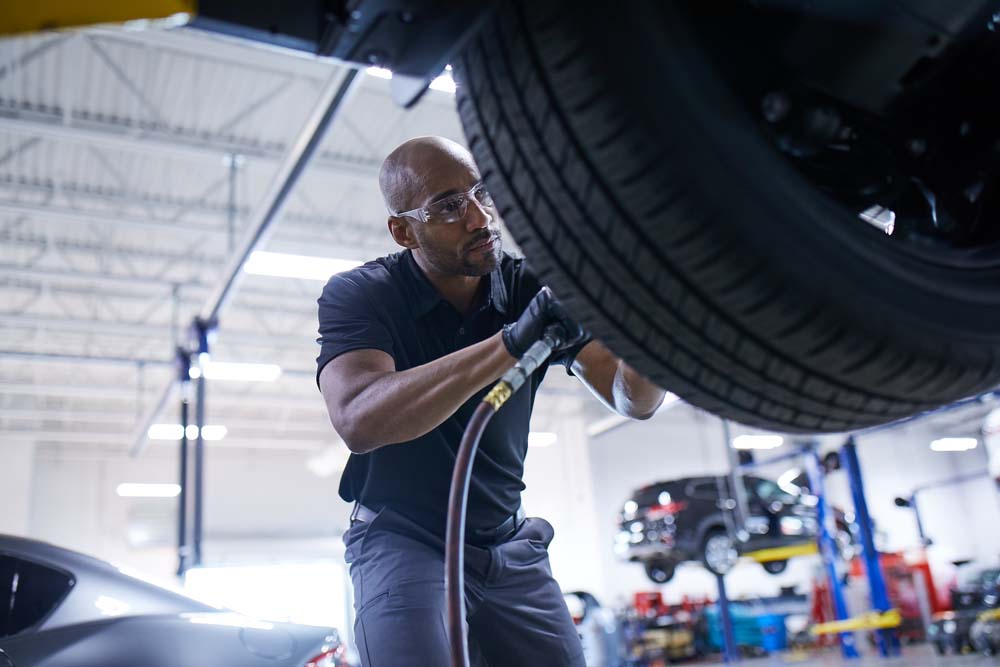
Each autumn, we watch the leaves change color, and the temperature slowly drops. With the frequent changes in the weather, you’ll also notice your tire pressure changes as well. Heritage Mazda Bel Air shares why it changes and when you need Mazda tire service.
How Temperature Affects Your Tire Pressure
During the summer, the air molecules in your tires push outward with more force than normal. This causes the air in your tires to expand and raises your tire pressure. When the temperatures drop, the molecules slow down and get closer together. This forces the volume of the air to shrink, which lowers your tire pressure.
How Much It’s Affected
Your tire pressure generally changes about one or two PSI (pounds per square inch) with every 10 degrees Fahrenheit change in temperature. However, while you’re driving, the friction with the road can warm up your tires and increase the tire pressure. This is why it’s always important to check your tire pressure when your tires are cold, meaning they’ve been sitting idle for a few hours.
Checking Your Tire Pressure
Each fall and winter, cold temperatures can trigger a low tire pressure warning. You can manually check your tire pressure with a tire pressure gauge or inside your vehicle on the Vehicle Status Monitor. You’ll want to factor in how much your pressure is affected and consider how it will increase when driving. If it’s lower than it should be, you need to add air. However, don’t preemptively add air, because overinflated tires can lead to uneven tire wear and have a higher risk of blowout.
Schedule MAZDA Tire Service in Fallston, MD
Routine tire service can help you preserve your tires. The Mazda-trained technicians at our service center can help. Visit Heritage Mazda Bel Air for Mazda service today!
